
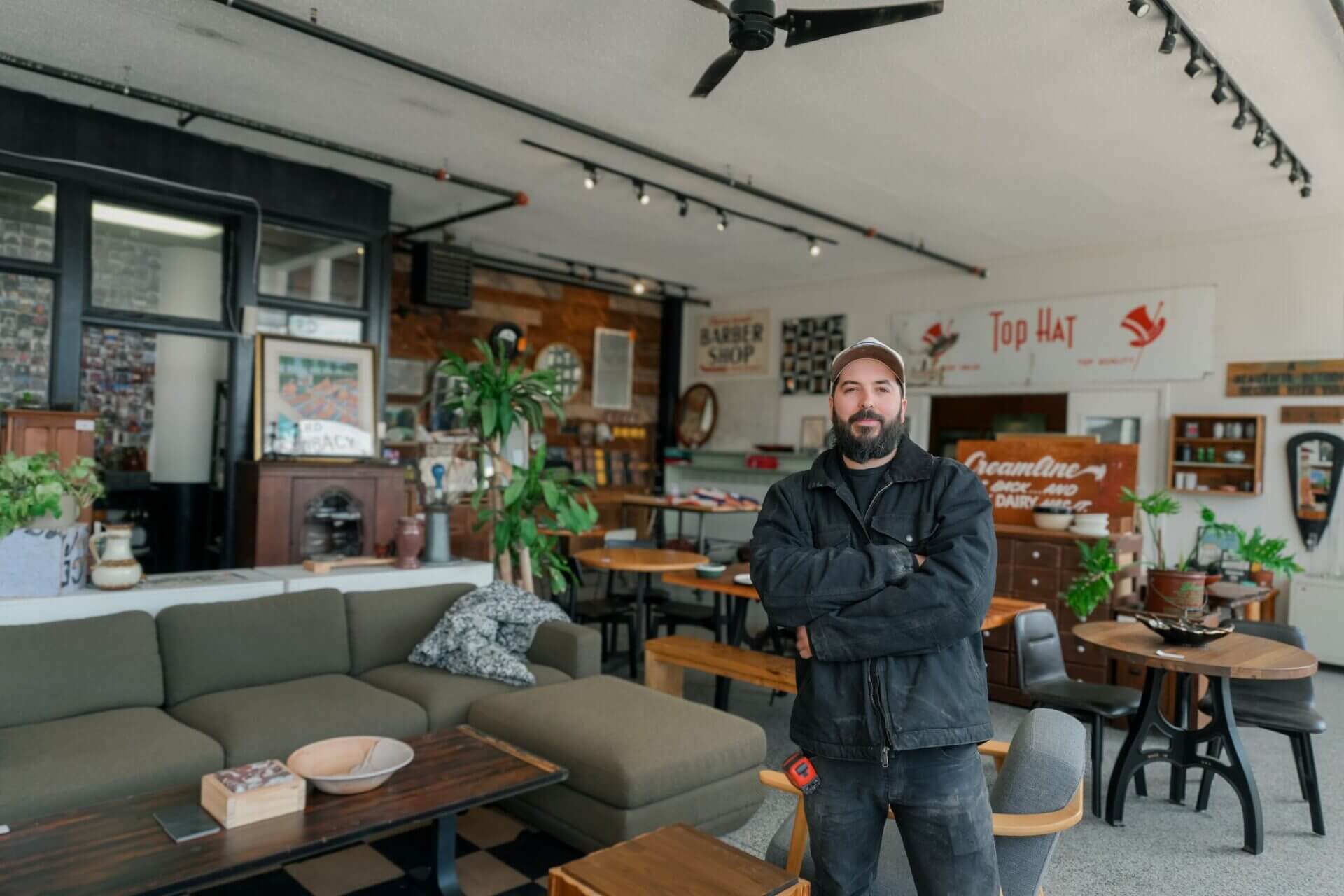
Woodward Throwbacks began as a hands-on passion project rooted in creativity, resourcefulness, and a growing appreciation for Detroit’s built environment. Founded by Kyle Dubay and his business partner, Bo Shepherd, the business officially took shape around 2014 after years of building furniture and décor from reclaimed materials salvaged throughout the city.
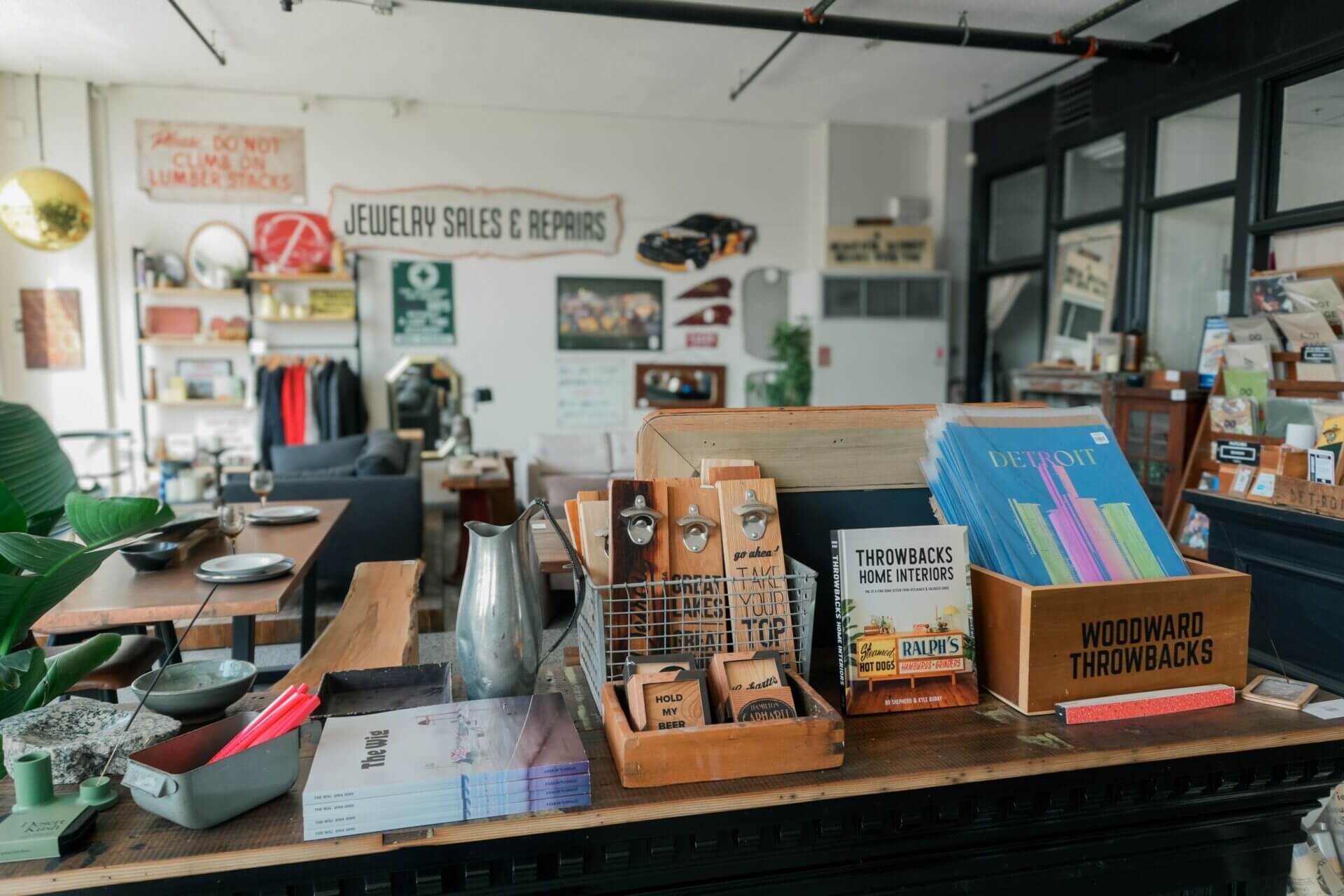
In its earliest days, the team worked out of a one-car garage near Brush Park, creating wooden signs, bottle openers and small furniture pieces using found wood from illegal dumping sites and renovation sites. Selling at Eastern Market helped validate the concept and introduce their work to a broader audience, while the use of reclaimed materials and storytelling set the brand apart.
As demand grew, Woodward Throwbacks reached a pivotal moment with support from Motor City Match, a program previously supported by the NEI, to help Detroit entrepreneurs access capital and guidance for commercial space. A Round 1 participant, the business received critical financial support that allowed them to renovate their first small building on Michigan Avenue near Corktown. In addition, NEI provided support to Woodward Throwbacks through Design Core Detroit, further strengthening its growth and development.
“That really helped us get the project off the ground,” Dubay said. “At that time, it was potentially the difference between getting it done or not.”
Beyond funding, the application and planning process helped the business mature operationally. Preparing business plans, budgets, and construction timelines gave the team tools they would continue to rely on as the company expanded.
“It makes you get your stuff together,” Dubay said. “It’s not just a handout. You have to put the work in, and that helps you grow in the long run.”
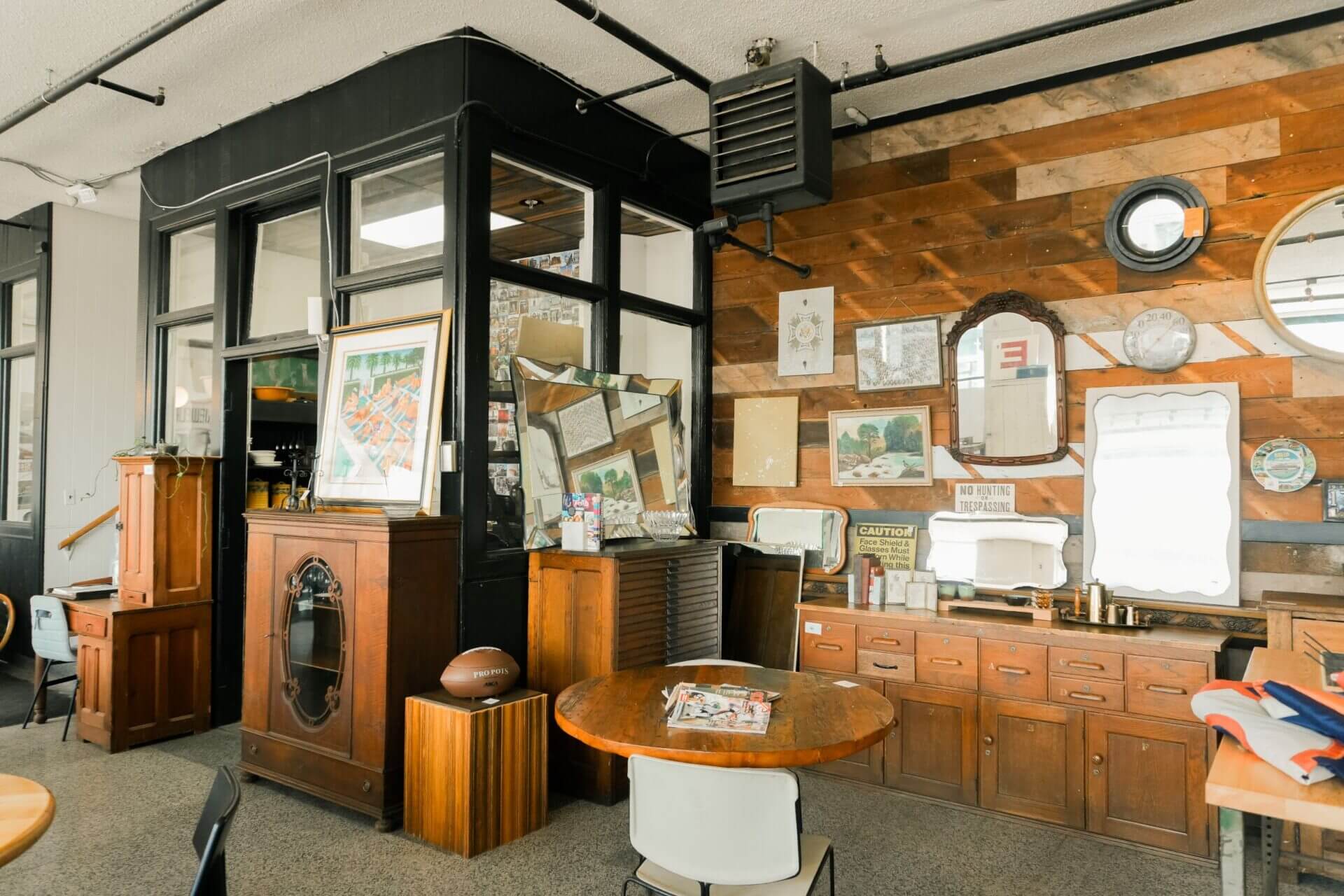
From that space, Woodward Throwbacks transitioned into wholesale, selling products to boutiques across the country and securing placements with national retailers. As mass-produced alternatives entered the market, the business once again adapted, shifting its focus toward architectural salvage, bespoke furniture, and custom design work.
That evolution led to the purchase of a much larger building in Hamtramck, which now serves as both a studio and a public-facing showroom. With increased space and a growing team, the business leaned into highly customized furniture and interior design projects that blend reclaimed and new materials, drawing on years of experience restoring old buildings.
“Now we’re booked months out, the team will likely grow, and we’re expecting a big bump in revenue this year,” he said.
Today, Woodward Throwbacks operates with a team of eight to ten staff members and a network of collaborators, completing residential and commercial design projects across Michigan and beyond. After several challenging years in the home and design industry, the business is experiencing renewed momentum, with projects booked months in advance and plans to continue growing its team.
For Woodward Throwbacks, that progress reflects both creative persistence and the importance of support at key moments. Access to NEI-supported programs helped transform a small, self-taught operation into a sustainable Detroit-based design studio, one built to evolve alongside the city that inspired it.
To learn more, visit throwbackshome.com.